You’ve seen them on long highway stretches, those pull-off lanes with the big scales and the “All Trucks Must Report” signs. For most drivers, they’re a minor annoyance or a curiosity. For the trucking industry and taxpayers, they represent a complex economic balancing act: protecting billions in public infrastructure while imposing real costs on freight movement that keeps the economy humming.
Weigh stations exist to enforce weight limits, typically capping trucks at 80,000 pounds gross vehicle weight in the U.S. (with per-axle restrictions). But beneath the scales lies a deeper story of externalities, incentives, technology, and trade-offs.
Why Weigh Stations Matter Economically
Trucks move the vast majority of U.S. freight. Overloading them might seem like smart business, more cargo per trip means higher revenue. Yet the damage they cause tells a different story.
Pavement damage follows the fourth-power law: the impact of axle weight rises dramatically with small increases in load. A fully legal 80,000-pound five-axle tractor-trailer inflicts roughly the same road wear as 9,600 passenger cars.
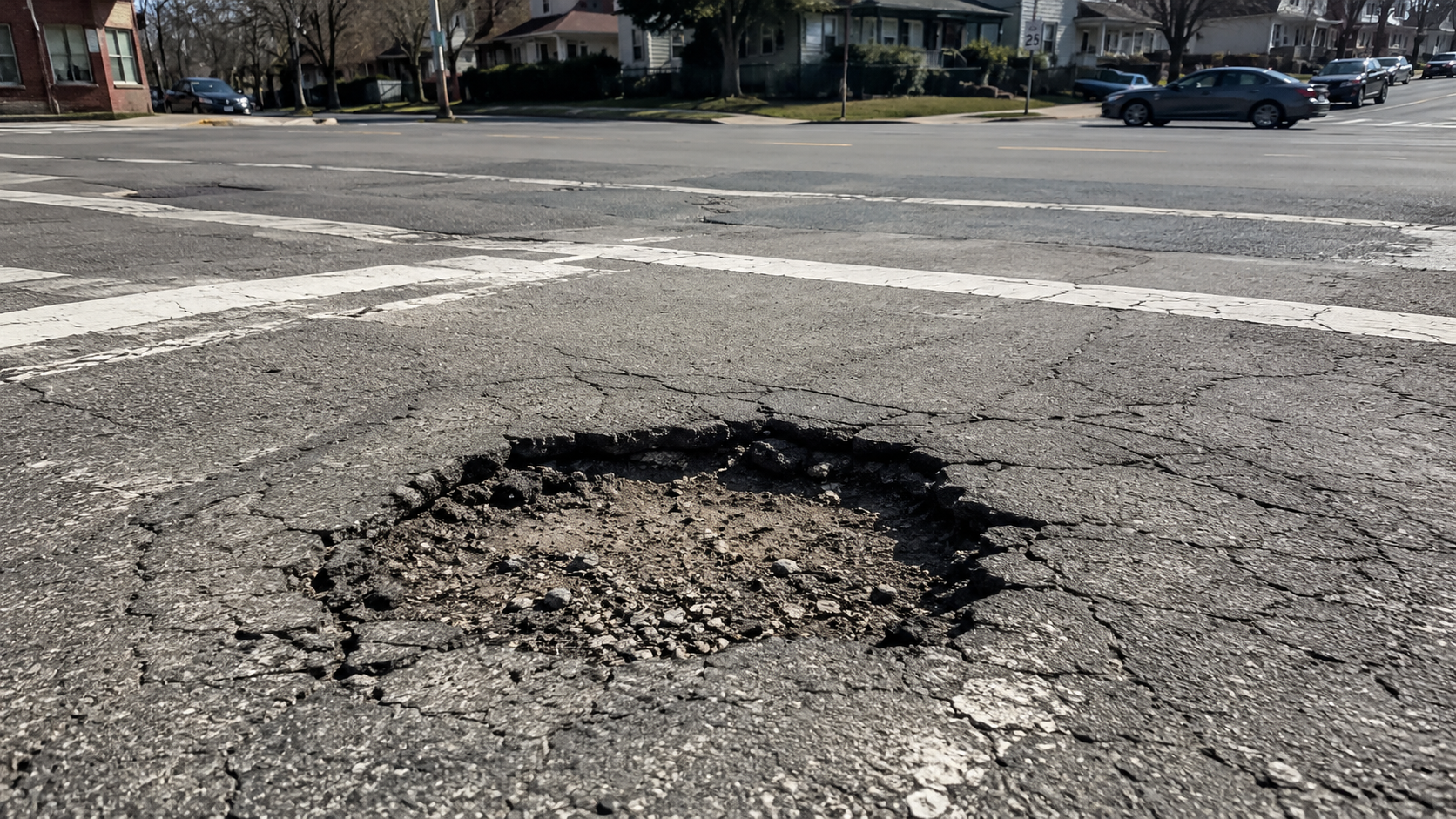
Older studies estimated annual U.S. pavement damage from overweight trucks in the range of $160 million to $670 million. Individual states feel the pinch too: Wisconsin has attributed around $41 million yearly to overweight operations, while North Carolina estimated an extra $78 million. These are costs ultimately borne by taxpayers through higher road maintenance and repair budgets.
Safety adds another layer. Overweight trucks brake more slowly, handle worse, and increase rollover and accident risks, imposing societal costs in injuries, insurance, and emergency response.
In economic terms, weigh stations are a tool to internalize these negative externalities. Without enforcement, carriers capture the private benefits of overloading while shifting repair and safety costs onto the public.
The Real Cost to Truckers
For carriers, weigh stations represent direct operational friction.
A typical stop lasts 3–5 minutes plus queuing, burning roughly 0.5 gallons of diesel and costing around $8.68 in lost productivity, fuel, and time. That is a long-cited FMCSA-era estimate, and the real-world cost has likely grown with inflation, higher equipment costs, higher insurance, and tighter delivery windows.
On busy corridors, these stops add up fast, delaying just-in-time deliveries, extending driver hours-of-service, and increasing stress. Fines for overweight violations or failing to stop can range from hundreds to thousands of dollars depending on the state and severity.
It’s no wonder many drivers and fleet managers view stations as a “cash grab” or unnecessary drag. Yet the alternative, unchecked overloading, would degrade roads faster, raise long-term shipping costs, and increase accident rates.
How Weigh Stations Can Turn Into A $2,000 Yearly Cost
The cost does not come from one stop. It comes from repetition.
If a weigh station stop costs roughly $5 to $10 in time, fuel, and operating friction, a driver who gets pulled in 200 times a year could lose about $1,000 to $2,000 annually.
That number can climb higher on lanes with frequent scale houses, long queues, tight appointment windows, or poor bypass rates. For an owner-operator, the damage is not just diesel burned at the ramp. It is time lost, clock burned, delivery pressure, missed reload windows, and more stress for no extra revenue.
That is why bypass programs matter. If you are legal, safe, and running clean, every green light is not just convenience. It is money staying in your truck.
Technology Changes the Equation
The good news? Modern bypass systems are dramatically shifting the economics in favor of compliant operators.
Programs like PrePass and Drivewyze PreClear use transponders or software to pre-screen trucks based on safety records and weight data. Safe, legal trucks often receive a green light to bypass entirely.
Real-world results are impressive:
- One fleet, USA Truck, saved over $1.36 million and 12,576 driver hours in just six months.
- Another, Arka Express, cut weigh station time by 329 hours and saved $34,269 in operating costs in a single month.
- Industry-wide, PrePass has facilitated 1.6 billion bypasses, generating an estimated $12 billion in operational savings, 136 million driver hours saved, and 584 million gallons of fuel conserved historically.
Per-bypass savings typically include about 5 minutes of time, half a gallon of fuel, and $5–$10+ in operational costs. On major routes like I-80 from California to New Jersey, a single compliant truck can save 80 minutes and over $100 in combined costs one way.
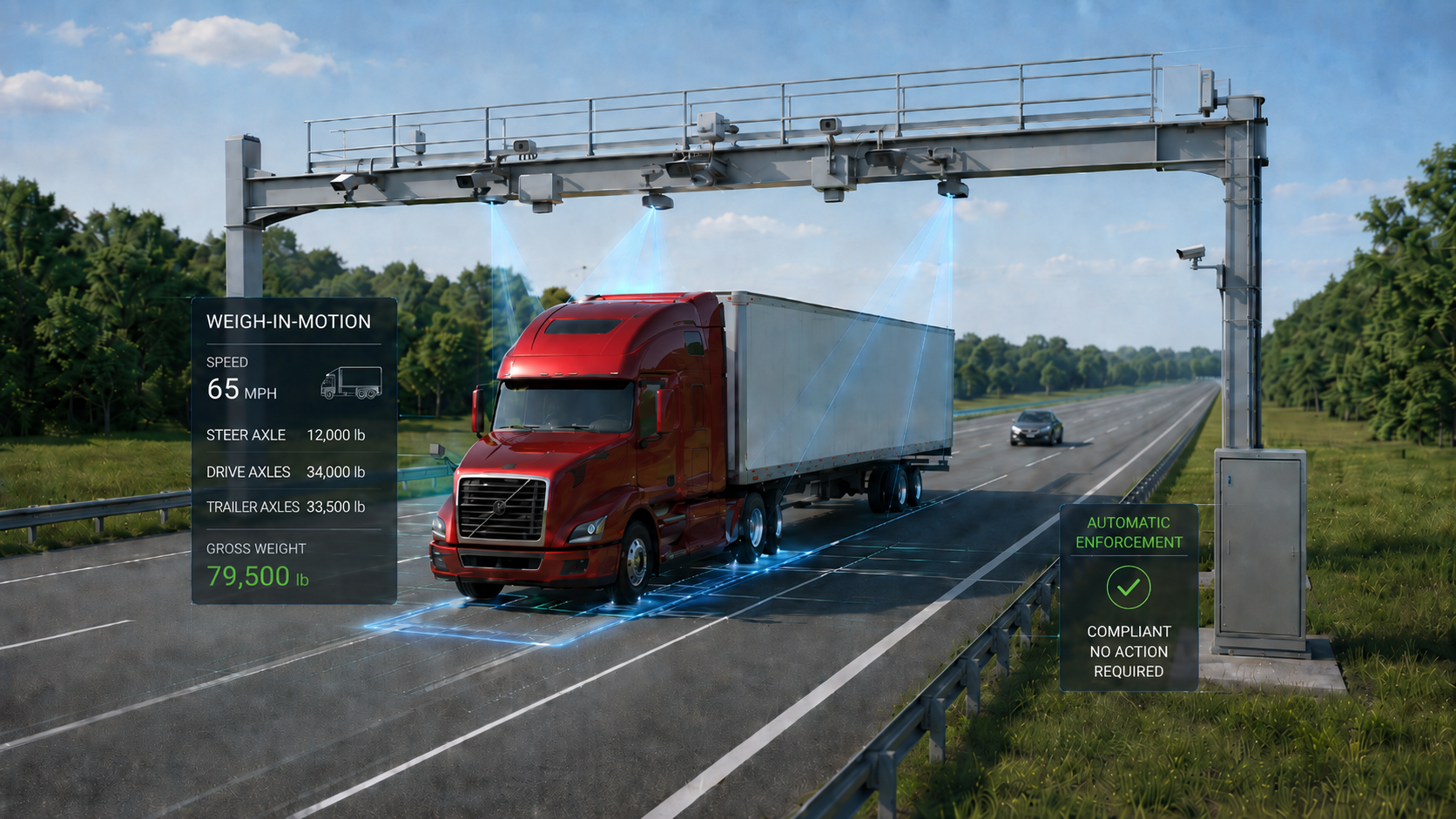
Even better are weigh-in-motion (WIM) and virtual weigh stations. These use sensors to weigh trucks at highway speed, reducing or eliminating stops while still catching violators. Deployment costs run $300,000 to $1.4 million, far less than traditional fixed stations, which often cost $12 million+.
The Bigger Picture
Weigh stations and their modern successors support a more efficient freight system overall. Reliable roads and bridges reduce long-term logistics costs. Better safety records can lower insurance premiums. And targeted enforcement creates a level playing field, carriers who play by the rules aren’t undercut by those who overload.
Critics rightly point out that the system isn’t perfect. Enforcement intensity varies by state, some stations create bottlenecks, and the compliance burden falls heaviest on smaller operators. Debates continue about whether current weight limits are optimal for modern trucks and infrastructure.
Yet the data shows the system delivers net economic value. By preventing excessive road damage and promoting safer operations, weigh stations help keep freight moving efficiently while protecting public assets worth trillions.
Looking Ahead
As e-commerce and freight volumes grow, the pressure on infrastructure will only increase. The future likely lies in smarter, less intrusive enforcement: expanded virtual WIM networks, better data integration, and incentive-based compliance programs that reward high-performing fleets with near-total bypass rates.
In the end, weigh stations aren’t just about scales and fines. They’re a practical response to a fundamental economic tension: the private incentive to maximize load versus the public cost of damaged roads and unsafe highways. Technology is helping resolve that tension more efficiently than ever.
Next time you pass a weigh station and see trucks pulling over, or sailing through on a green bypass signal, remember: those brief stops are part of a much larger calculation that keeps America’s supply chains and its roads running.
What do you think? Are weigh stations a necessary evil, or is there a better way to balance these economics? Share this article if it sparked any ideas.